
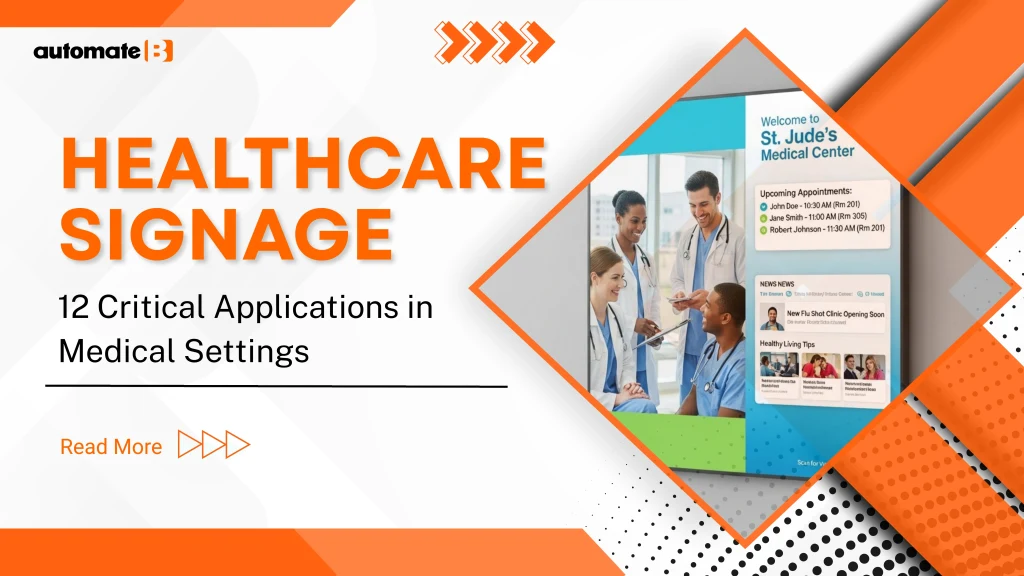
Healthcare Signage: 12 Critical Applications in Medical Settings
Hospitals and clinics are strange environments to communicate in. People aren’t browsing. They’re not relaxed. Often, they’re anxious, distracted, or already overwhelmed before they even reach the reception desk. That’s why healthcare signage matters more than it does almost anywhere else. Not because it looks good, but because it removes small moments of uncertainty. And in medical settings, those small moments add up quickly.
Printed signs used to do the job. Sometimes they still do. But healthcare doesn’t stand still. Departments change. Policies shift. Schedules move. Static boards struggle to keep up. This is where digital signs have quietly become essential rather than optional.
Below are twelve ways healthcare signage is actually being used today. Some are obvious. Some are easy to overlook. All of them matter more than they might seem at first glance.
Also Read: Top Features to Expect from a Digital Signage Solution Provider
1. Wayfinding That Reduces Stress Before Anyone Speaks

Getting lost in a hospital feels worse than getting lost almost anywhere else. Corridors look the same. Signage overlaps. People hesitate, then hesitate again.
A well-placed digital signboard cuts through that hesitation. Clear directions. Simple arrows. Sometimes just reassurance that you’re going the right way.
It doesn’t need to be clever. It just needs to be clear. And clarity, in healthcare, lowers stress more than we tend to acknowledge.
2. Queue and Appointment Displays That Calm Waiting Rooms

Waiting rooms amplify time. Five minutes can feel like fifteen when no one knows what’s happening.
Healthcare Signage quietly fixes this. Numbers. Estimated wait times. Simple progress indicators.
With digital signs, patients don’t have to ask. Staff don’t have to explain repeatedly. The room feels calmer, even if the wait itself hasn’t changed.
Also Read: The Best Digital Signage Software for Every Business: A Complete Review
3. Real-Time Announcements That Stay Accurate

Healthcare information changes constantly. Doctors get delayed. Rooms become unavailable. Appointments shift.
Printed notices fall behind almost immediately.
A centralized digital signage solution allows updates to appear across screens in seconds. No confusion. No outdated messages lingering longer than they should.
That immediacy is practical. But it’s also reassuring.
4. Health Education That Fills Otherwise Empty Time

Waiting doesn’t have to be wasted, although it often is.
Short educational messages on digital signboards give patients something useful to engage with. Preventive tips. Awareness reminders. Simple explanations.
Nothing overwhelming. Just enough to feel informative rather than distracting.
Patients are already thinking about health. Digital signage meets them in that mindset.
Also Read: The Growing Need for Digital Signage Software
5. Emergency Messaging That Needs No Interpretation
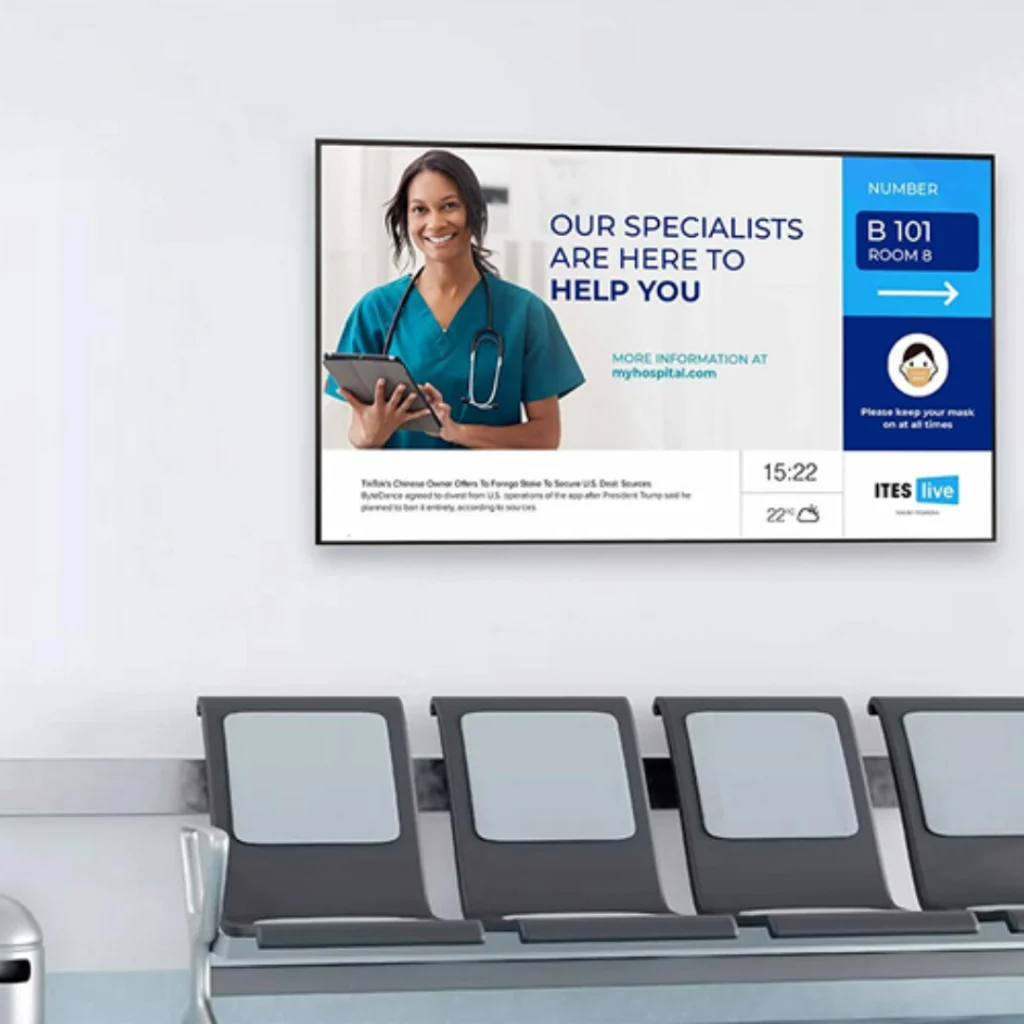
In emergencies, signage stops being informative and becomes directive.
Evacuation routes. Safety instructions. Immediate alerts. Digital signs ensure these messages are visible everywhere, at the same time.
A digital signage solution ensures consistency. No mixed messages. No delays. When clarity matters most, digital signs deliver it quickly.
6. Department Status and Availability Displays
Is a department open? Is a service delayed? Has a room been reassigned?
Digital signboards outside departments answer these questions before they’re asked. It saves staff time. It saves patients frustration.
It also sets expectations, which often matters more than the actual delay.
7. Visitor Guidance and Policy Updates
Healthcare policies change more often than most people realize. Visiting hours. Mask requirements. Check-in rules.
Digital signs make it easier to communicate these updates without printing new posters every week. Visitors see the rules clearly. Fewer awkward conversations follow.
Also Read: Top 7 Features to Look for in Retail Store Digital Signage Software
8. Internal Communication for Medical Staff
Not all signage is patient-facing. And perhaps not all of it should be.
Digital signage in staff areas shares shift updates, reminders, internal notices, or quick alerts. This kind of communication reduces reliance on emails that often go unread.
It’s not glamorous. But it works.
9. Multi-Language Communication Without Clutter
Hospitals serve diverse communities. Language barriers increase stress fast.
Digital Healthcare Signage can rotate messages in multiple languages without crowding walls with text. This flexibility is one of the quieter strengths of a digital signage solution in healthcare.
Also Read: The Future of Advertising: How Digital Signage is Redefining Marketing Strategies
10. Reinforcing Hygiene and Safety Behaviours

Handwashing reminders. Mask usage. Infection control messages.
These signs work best when they’re present but not permanent. Digital Healthcare Signage allows these messages to appear when needed and fade when they’re no longer relevant.
That balance matters.
11. Subtle Branding That Builds Trust
This is less obvious, but still important.
Clean, well-maintained digital signboards suggest organization and care. Patients may not consciously notice it, but environments influence trust.
In healthcare, perception and confidence are closely linked.
Also Read: 500+ Ways Digital Signage is Replacing Human Interaction
12. Reducing Repetitive Questions for Staff
This might be the biggest benefit of all.
When signage answers common questions, staff can focus on care instead of directions or explanations. Digital signs don’t replace human interaction. They protect it.
That’s an important distinction.
Why Digital Signage Fits Healthcare So Well
Healthcare environments change constantly. Accuracy matters. Timing matters. Emotions run high.
Digital signage works here because it adapts. A digital signboard can change instantly. A digital signage solution keeps information aligned across departments.
And when it’s done right, signage doesn’t draw attention to itself. It simply reduces friction.
Conclusion
Healthcare signage isn’t about screens. It’s about reducing uncertainty in places where uncertainty already feels heavy.
From wayfinding to emergency alerts, digital signs support patients, visitors, and staff in ways that often go unnoticed but deeply felt. With the right digital signage solution, hospitals and clinics can keep information accurate, timely, and calm.
This is where automateB fits naturally. automateB provides a centralized platform to manage healthcare digital signboards efficiently, allowing real-time updates, consistent messaging, and simple control across facilities. It helps healthcare teams communicate clearly without adding operational burden.
In medical environments, that kind of quiet reliability makes a real difference.
FAQ’s
1. What is healthcare digital signage?
It refers to the use of digital signs to display directions, updates, and information in medical facilities.
2. How do digital signboards help patients?
They reduce confusion, improve navigation, and provide timely information without needing verbal explanations.
3. Can small clinics use digital signage?
Yes. Digital signage scales easily from small clinics to large hospitals.
4. Are digital signs useful in emergencies?
Yes. They allow instant, consistent emergency communication across multiple areas.
5. How does automateB support healthcare signage?
automateB helps healthcare organizations manage digital signage centrally, ensuring accurate and timely communication across all screens.