
Will 2026 Be the Year of Wireless TV Displays?
As consumer technologies and digital signage continue to improve rapidly, many are left asking if 2026 will be the year of the wireless television display. Companies wanting to have a more aesthetically pleasing appearance of their displays, with better delivery of messages in a much smarter way, are driving the demand for wireless displays. The opportunity presented to companies using digital signage through the cable-less experience provided by wireless displays and the use of platforms like automateB could fundamentally change the way digital signage is created and delivered.
Also read – Top 5 Benefits of Using Digital Displays in Commercial Spaces
Below are the key factors shaping the rise of Wireless TV Displays in 2026.
1. Shows the Value of Wireless TV Displays
A common factor driving many companies’ decision to use Wireless TV Displays is their visually clean design and non-cable requirement. Removing all the excess cables gives retailers, businesses and all locations the ability to create an upscale appearance for their audience. An additional benefit of this simple design is that the installation process is faster and therefore less time-consuming for businesses.
2. Increased Flexibility of Digital Signage
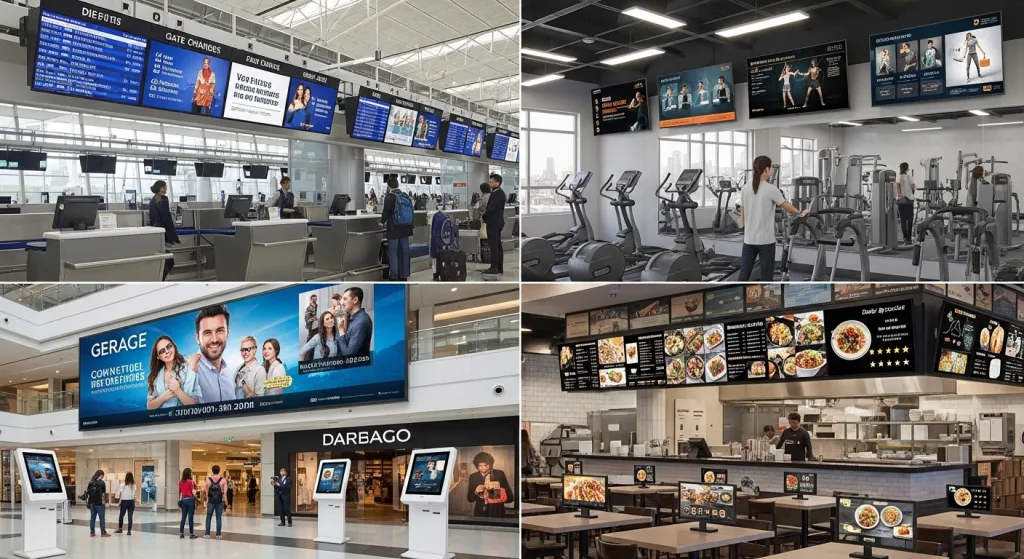
Without needing to use wires, wireless displays can be positioned almost anywhere they can display images, regardless of where the cables are located. This is particularly useful in locations that are changing rapidly, such as airports, gyms, shopping malls and restaurants. By integrating with automation (through an API), you can send a real-time update directly to the display without being concerned about how the display connects physically.
Also read – Why Digital Display Software is a Must-Have for Every Industry in 2025
3. Developments in Wireless Transmission Technology
Advancements in ultra-low latency streaming, Wi-Fi 7, and high-bandwidth transmission protocols have enabled wireless television displays to stream both 4K and 8K media at a seamless rate. In 2026, these technologies will have reached full maturity, resulting in wireless display performance being virtually indistinguishable from wired display performances.
4. Minimized Upkeep and Less Time Spent On-the-Go
A reduction in cables equals a reduction in potential failure points. A wireless configuration offers a solution to issues caused by physical damage, unplugging by mistake (on purpose), or disrupted signals. In addition, automateB allow for business owners to control their content remotely, therefore eliminating the time and money spent maintaining their equipment.
Also read – Top Features to Look for in Digital Display Software in 2025
5. Cost Efficiency for Deployments Across Multiple Locations
Businesses that deploy multiple screens at the Same time will save the highest amount of money. Wireless Displays Save Infrastructure Expenses, Simplify the Installation Process and Save on Marginal Labour Costs incurred when sending technicians out to gateway devices. Therefore, Deploying Digital Signage Networks on a larger scale is both More Affordable and More Efficient.
6. Cloud-Based CMS’s Will Work Seamlessly with a Wireless Future

The automation tools provided by automateB, such as automatic scheduling, instant update, and multiple languages, are a breath of fresh air in a world that is becoming more reliant on wireless television displays. Companies that utilize this wireless television displays will immediately look for ways to manage their networks so that they can maintain a high level of service and continue to evolve as technology changes.
Also read – How to Turn Any Screen into a Digital Display
Conclusion
Wireless TV displays are rapidly transitioning from being a concept of the future to becoming a central part of any company’s digital advertising strategy, 2026 could be something of an inflection point in their adoption. With cleaner installs, improved placement flexibility, enhanced wireless connectivity and robust content creation tools, companies can bring new interactive ideas to life with more ease and creativity than ever before. With solutions such as automateB, the transition becomes all the more effective with centralized control, real-time updates and seamless content automation that allows organizations to realize the full power of a wireless digital signage tomorrow.
FAQ’s
1) What are Wireless TV Displays, and how does automateB service them?
Wireless TV Displays are televisions that receive their material via Wireless technology, rather than through physical wires. As such, automateB provides a streamlined process for delivering and spending content wirelessly, and managing content remotely.
2) Are Wireless TV Displays given 24/7 reliability for Digital Signage with the use of automateB?
Absolutely. Modern-day wireless standards paired with automateB ability to monitor playback in real-time create a digital signage system that provides reliable, high-quality playback for businesses.
3. Can automateB manage many Wireless TVs at multiple locations?
Yes! automateB is built to provide centralized content upload and control of many locations.
4. How Do Wireless TV’s Reduce Hardware/Installation Costs for Businesses?
Yes! Using Wireless TVs allows businesses to decrease the number of wires and complicated installation processes; therefore, the installation process is easier, less expensive to do, especially when combined with the remote capabilities of automateB.
5. Are Wireless TV Displays likely to be adopted as the standard for signage in 2026, with the aid of automateB?
A lot of current trends indicate that they may be. Due to automateB scalable platform, as well as the increasing prevalence of wireless technologies, you can expect to see more widespread adoption of a “wireless-first” business model in 2026.