

How Signage for Hotels Can Boost Brand Image and Guest Engagement
Have you ever thought about why some hotels feel more welcoming and memorable than others?
It does not necessarily have to do with the luxurious carpets or Jewel Tone fabrics. It’s about how they are communicating their brand. Digital Signage for hotels is beyond way finding and room prefixes. It is an important part of the initial impression a guest has, building off your brand, and enhancing the experience of the consumer. All signage, whether it is digital, interactive, or static will, speak to the personality, professionalism and hospitality of the hotel, from the time the guest enters the lobby until the time they check out.
Great planning and design of smart digital signage in hospitality space is not just decor. It is a branded tool that tells your story, engages your guests, and builds trust. Let’s explore how effective sign requests can help hotels build their brand image and keep guests connected like never before.
Also Read: The Growing Need for Digital Signage Software
1. The First Impression Starts at the Door
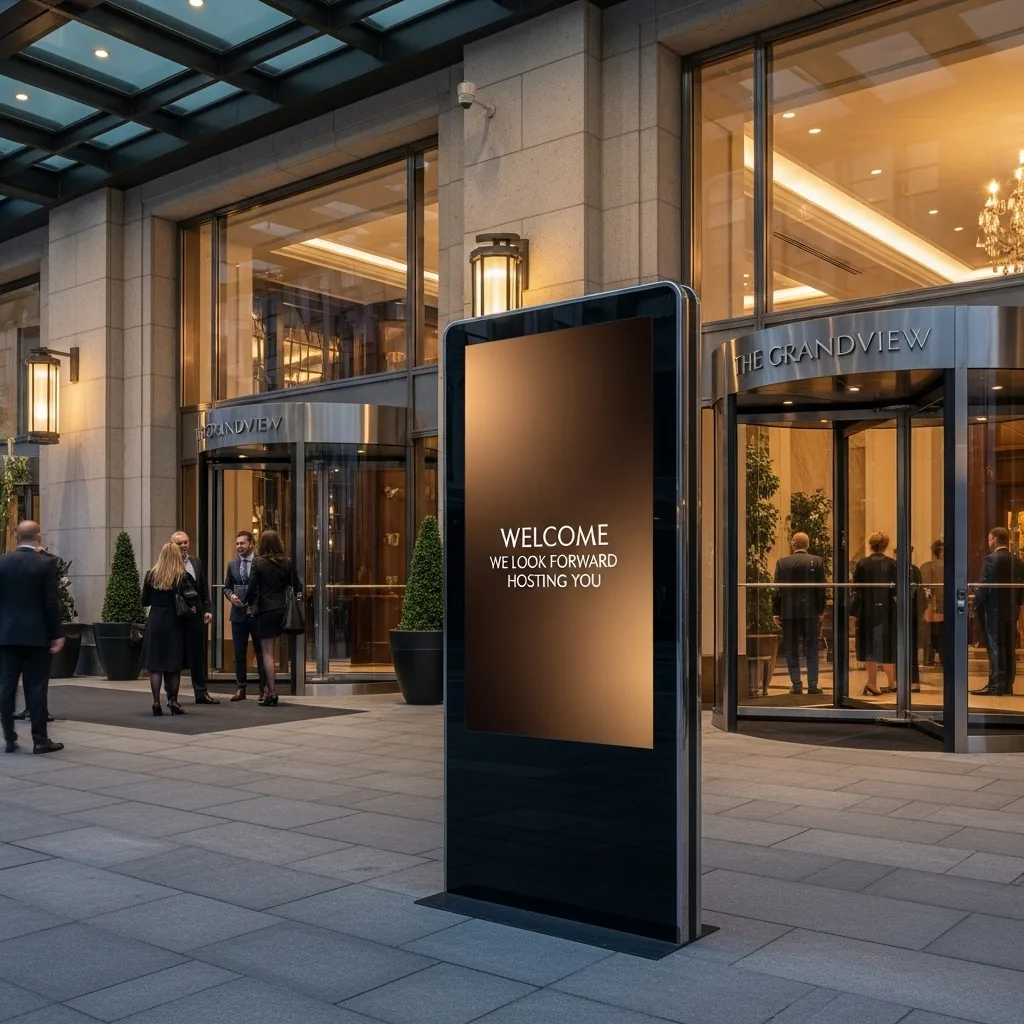
Your sign is like the first point of contact for your guests before they come in to see you in the lobby or are introduced to your staff. The exterior sign gives an indication of what to expect when they come into your hotel for the first time. Using an attractive and bright exterior sign creates feelings of warmth and professionalism. It’s more than just putting your name on a board. It’s saying, “Welcome, we look forward to hosting you.” The exterior sign establishes the theme of the establishment inside, whether it’s a high-end illuminated logo or a simplistic sign that fits the theme of the hotel.
Also Read: Why Digital Signage is Key for Modern Hospitality Experiences
2. Reflecting the Brand’s Personality
Hotels often have a backstory, with some presenting a more regal feel while others are. Signage generates excitement and meaning around the experience. The combination of fonts, colors, and the way they are positioned together mirrors how your brand is intended to be interpreted and experienced. By using excellent signage, a representation of who you are that is also present in the brand’s identity, will result in a better brand presence.
3. Helping Guests Navigate with Ease

I think over the years, you can all relate to being in that same situation. Lugging your bags down a long hallway trying to locate your assigned room or breakfast area. Having a complicated hotel layout makes the potential experience of a guest, a less-than-pleasant one. That is why having clear, well-placed signage is so beneficial.
Directional signs and interactive digital maps help guests move around effortlessly. The easier it is for them to navigate, the more relaxed and comfortable they feel. When your guests can find their way without asking for help every few minutes, it leaves a subtle but strong impression of efficiency and care.
Also Read: 12 Must Have Features for Enterprise Digital Signage
4. Making the Experience Interactive
Digital signage gives hotels a way to have more interaction with their guests than just using printed information such as boards, signs etc. For example, having a digital sign board in the lobby for guest information such as daily hotel activities (happy hours) and attractions in the area. One of the best examples of how hotels use digital signage for interaction is by making a special digital “welcome” video/message that they create for each guest. Also posting digital QR codes that link the guest to the restaurant menus, maps of the city, and spa special offers. These small pieces of digital interactivity allow hotels to keep guests engaged while they are on property, as guests feel more connected to the hotel and the different services that it offers.
5. Subtle Promotions, Strong Impact

Another benefit of digital signage is that it can be used to promote what a hotel has to offer without being overtly “sales-oriented.” Rather, digital signage should be used as a vehicle for sharing stories about what is happening in your hotel and in your city. Digital displays in key locations often indicate the types of special deals available on weekends, upcoming special events, and new menu items at the hotel’s restaurant. Many times, elements of digital signage can be strategically positioned in highly traffic areas outside the hotel (e.g., elevator, banks and lobby) to help garner interest and motivate guests to learn more about the hotel. Thus providing a natural, unobtrusive way for hotels to generate incremental revenue.
Also Read: The Power of Digital Signage: Boosting Brand Visibility like never before
6. Building Trust and Professionalism
The aesthetics of good signage are important, but it serves the purpose of providing guests with a sense of confidence in your hotel. When your hotel signage is polished, consistent, and professional looking, it gives guests the impression that your hotel has a high-quality staff who is attentive to detail and cares about the guest’s well being. The same applies to emergency exit signage and signs that indicate other types of emergency exit routes. Both create a sense of security and trust in your guests when those signs are clean, clearly marked, and properly placed.
Also Read: Creative Content Ideas for Digital Signage That Grab Attention
Conclusion
Hotel signage is much more than just giving your guests directions; it’s a representation of who you are as a business. Hotel signage communicates to your guests the identity of your hotel, as well as the values and commitments that your hotel has made to its guests. The design and application of hotel signage from the moment the guest enters until they enter their rooms are considered part of your total image. Here is where automateB plays a strong part. With smart centrally managed cloud digital signage software, automateB, helps you to deliver dynamic and real-time content across multiple location with a single click.
This attracts attention, improves customer engagement and enhances the overall customer experience. Hotel signage, when designed and executed properly, will give your clients a clear indication of your hotel’s brand all throughout the hotel; although subtle in terms of volume, the impact of hotel signage can be strong.
FAQ’s
1. What is signage for hotels, and why is it important?
Hotels utilize various types of signage (digital, static and interactive) to promote the hotel brand, help with navigation, provide guest facts, and promote hotel services. Hotel signage is an important component of any hotel’s first impression. It reinforces the hotel’s brand identity, and enhances the way in which hotels engage with guests throughout their property.
2. What are the benefits of digital signage for hotels and guests?
A well-designed and well-placed digital signage will help the guests to navigate easily and gain information about the property, restaurant and rooms with ease. Thus, resulting in an enjoyable and pleasant experience while staying in the hotel.
3. What Role Does automateB Play in the Management of a Hotel’s Digital Signage?
automateB is a Cloud-based platform for Digital Signage, which provides Hotels with the ability to manage their Digital Signage from a centralised location and to change content on the Digital Screens in Real Time. automateB provides Hotels with the ability to provide dynamic messages, and to promote hotel products/services through the use of electronic means across multiple locations with a Click of a button.
4. Is Strategic Signage an Effective Way to Increase Guest Interaction and Provide Additional Revenue for Hotels??
Yes. Hotels can promote their in-house services like events, spas, restaurants and other special offers. This can lead to higher guest participation and an increase in revenue.
5. Is digital signage for hotels better than static signage?
The primary benefit of digital signage over static signs used by hotels is the flexibility and instantaneous nature of the digital sign. Digital Signs are instantly updated with new content, and Digital Sign technology, automateB has a personalization function whereby each sign can show content targeted to the audience in real-time, in addition to being updated instantly. Hotels can now keep their information current without having to pay for the additional costs associated with printing new sheets of paper.